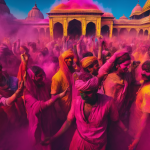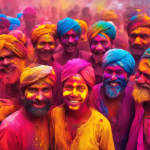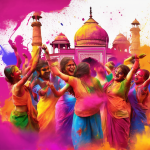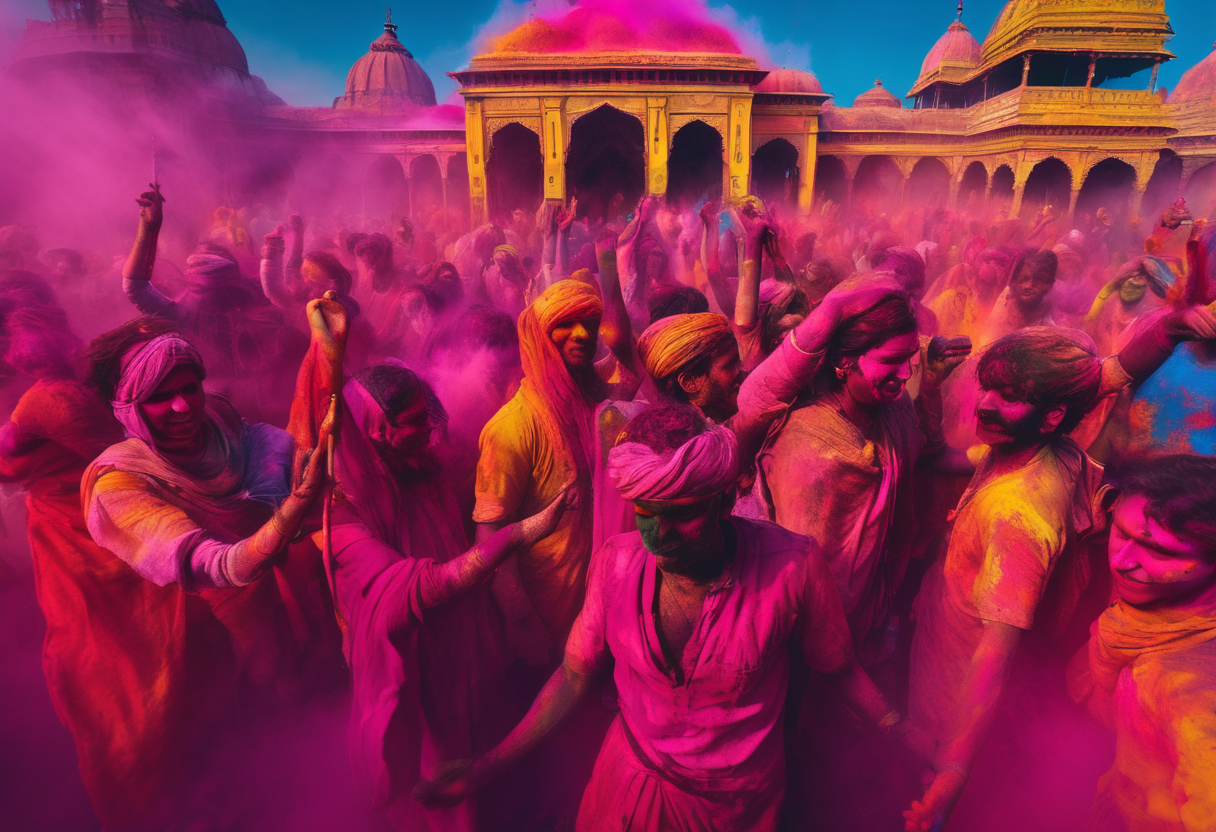
Holi, also known as the “Festival of Colors” and “Festival of Love,” is a popular Hindu festival celebrated primarily in India and Nepal. This vibrant and joyous celebration is usually held in the spring and has been celebrated for centuries. While the festival has evolved over time, its origins can be traced back to different Hindu legends and mythologies.
One popular legend states that Holi marks the triumph of good over evil, based on the story of the demon king Hiranyakashipu and his son Prahlada. Hiranyakashipu was granted a boon that made him nearly invincible, and he ordered everyone to worship him as a god. However, Prahlada refused to do so and instead continued to worship Lord Vishnu. Enraged, Hiranyakashipu attempted to kill Prahlada with the help of his sister, Holika, who had a cloak that made her immune to fire. However, her plan backfired and Prahlada emerged unscathed while Holika perished in the flames. This victory of good over evil is symbolized by the bonfires lit during the festival, known as Holika Dahan.
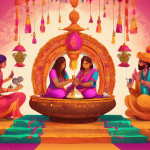
Another origin story of Holi comes from the love story between Lord Krishna and Radha. It is believed that Lord Krishna, who had blue skin, was jealous of his love Radha’s fair complexion. So, he playfully painted her face with colors, thus starting the tradition of throwing vibrant colored powders known as “gulal” during Holi celebrations. This joyful act has now become a predominant part of the festival and is enjoyed by people of all ages.
Over time, Holi has become a festival that brings people together regardless of their social status, caste, or religion. It is a time for forgiveness, reconciliation, and spreading love and happiness. From playing with colors to indulging in delicious sweets and delicacies, Holi is a festival that brings joy and excitement to people all around the world. As we celebrate this ancient tradition, let us also remember the rich history and origins of Holi that make it more than just a festival, but a symbol of unity and togetherness.